Physical Address
304 North Cardinal St.
Dorchester Center, MA 02124
Physical Address
304 North Cardinal St.
Dorchester Center, MA 02124

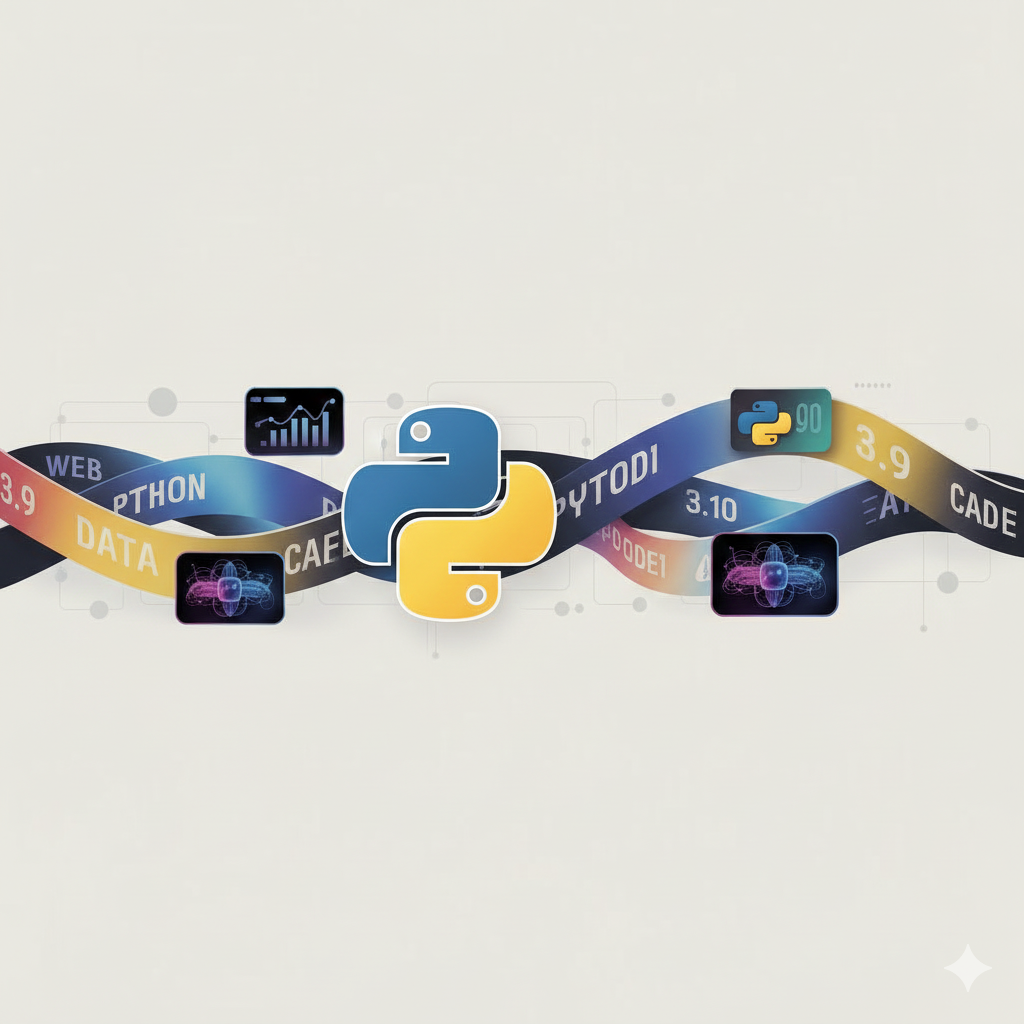
The Python programming language has grown from a simple scripting tool into one of the most widely used and in-demand languages in the world. Whether you’re learning to code, building web apps, analyzing data, or diving into artificial intelligence, Python likely plays a major role. But what exactly is Python? When was it created? And why is it so popular today?
This SEO-friendly guide covers Python’s history, usage, popularity, advantages, and disadvantages.
Python is a high-level, open-source programming language known for its readability and clean syntax. It enables developers to write code that is easy to understand and maintain, making it ideal for beginners and professionals alike.
Its simplicity doesn’t limit its power—Python supports multiple programming paradigms, including object-oriented, functional, and procedural programming.
Python was created by Guido van Rossum and first released in 1991. Van Rossum designed Python as a successor to the ABC language, emphasizing:
Over time, Python evolved through Python 2.x and eventually Python 3.x, which modernized the language and continues to be actively maintained.
One of the biggest reasons Python is so popular is its simplicity. Its syntax looks like plain English, making it one of the easiest programming languages for beginners.
Python offers libraries for nearly everything:
This ecosystem dramatically speeds up development.
Millions of developers worldwide use Python. Its active ecosystem means endless tutorials, tools, forums, and documentation—perfect for learning and troubleshooting.
Tech giants like Google, Meta, Netflix, Spotify, and Microsoft rely on Python for everything from automation to data science.
Python works on Windows, macOS, Linux, and more—completely free of licensing.
Python frameworks make it simple to build fast, scalable websites and APIs.
Python has become the unofficial language of data science. With tools like NumPy, Pandas, and PyTorch, it powers analytics, AI, and predictive modeling.
Python is one of the best languages for automating repetitive tasks—saving time and improving productivity.
Python’s flexibility and extensive libraries make it ideal for security testing and network automation.
Because it’s easy to read and write, developers often use Python to quickly prototype new software ideas.
Many schools and universities use Python as the first programming language taught to new students.
Python’s clean syntax reduces bugs and improves collaboration among teams.
Developers can create applications quickly with fewer lines of code.
There’s a Python package for nearly every task imaginable.
Python leads the machine learning and AI ecosystem thanks to its powerful libraries and active community.
You can use Python for web development, automation, machine learning, networking, scripting, and more.
Because Python is an interpreted language, it’s slower than compiled languages like C++, Rust, or Java.
While tools like Kivy exist, Python is not the first choice for native mobile apps.
Python can consume more memory compared to low-level languages, making it less ideal for embedded systems.
Due to the GIL (Global Interpreter Lock), multithreading can be limited. Developers often use multiprocessing or async programming instead.
Python’s combination of readability, versatility, and powerful libraries has made it one of the most influential programming languages ever created. Whether you’re a beginner or an experienced developer, Python offers immense value across web development, automation, data science, AI, and beyond.
If you want a language that empowers creativity while remaining easy to learn, Python is an excellent choice.